

Finding a hairstyle that looks beautiful while helping you care for your natural hair can feel like a balancing act. You want something versatile and stylish, but you also want to minimise breakage, protect your ends and avoid putting unnecessary stress on your scalp.
Protective hairstyles can help by reducing daily manipulation and limiting friction on the hair. For people with tightly coiled textures, including 4C hair, choosing the right style can make wash days, detangling and everyday hair care more manageable.
However, not every hairstyle labelled “protective” automatically protects your hair. Excessive tension, heavy extensions, prolonged wear and neglected scalp care can cause more harm than good.
Whether you prefer simple natural hairstyles or braided looks with extensions, here are 15 protective hairstyles for natural and 4C hair to inspire your next look.
1. Two-Strand Twists
Two-strand twists are one of the most versatile options for natural hair. They are created by dividing a section of hair into two strands and wrapping the strands around each other from the roots towards the ends.
You can wear twists in small, medium or chunky sections, depending on your preferred appearance and available styling time. Smaller twists create a more detailed finish, while chunky twists offer a fuller, more relaxed look.
Two-strand twists can also serve as the foundation for other styles, including twist-outs and pinned-up hairstyles.
Why they work: They can reduce daily manipulation and keep the ends of your hair organised when properly installed and maintained.
Styling tip: Work with gently detangled, moisturised hair and avoid twisting so tightly that your scalp feels uncomfortable.
2. Flat Twists

Flat twists are created by twisting two strands of hair together while incorporating additional hair as you move along the scalp. They lie close to the head, making them a useful alternative to cornrows for people who want a braided-looking pattern without traditional three-strand braiding.
You can create straight-back flat twists, curved designs, side patterns or combinations that lead into a bun or puff.
Flat twists are particularly versatile because they can be worn as a finished hairstyle or taken down later for a textured twist-out.
Why they work: They organise the hair close to the scalp and can limit repeated combing and handling.
Styling tip: Keep the twists comfortable around your edges and avoid excessive tension at the hairline.
3. Mini Twists
Mini twists are smaller two-strand twists installed throughout the hair. They are an excellent option if you want a style that offers flexibility while allowing you to work with your natural texture.
You can wear them loose, gather them into a ponytail or bun, or pin sections away from your face. Mini twists can also be used as a low-manipulation styling option between wash days, provided your hair and scalp are cared for properly.
Because the twists are small, installation can take considerable time, and the hair may tangle near the roots if the style is neglected.
Why they work: They make it easier to handle the hair in sections and can reduce the need for daily restyling.
Styling tip: Keep the roots clean, gently separate any developing tangles and avoid leaving the twists installed for longer than your hair can comfortably tolerate.
4. Flat-Twist Updo

A flat-twist updo combines the structure of flat twists with a gathered or pinned finish. The twists can run from the front towards the crown, curve around the head or lead into a low bun at the back.
This style is suitable for occasions when you want something more polished than loose twists while keeping your ends tucked away.
It can also be adapted to different hair lengths. Shorter hair may require more pins or a smaller design, while longer hair can offer additional options for shaping the updo.
Why it works: It keeps much of the hair organised and the ends gathered rather than left to rub against clothing.
Styling tip: Use smooth, hair-friendly pins and avoid pulling the front sections too tightly. An elegant updo should not cause pain or persistent tension.
5. Cornrows

Cornrows are created by braiding hair close to the scalp in continuous rows. They can be arranged in straight lines, curved patterns, geometric designs or more intricate layouts.
This classic hairstyle is suitable for natural hair of different lengths, provided there is enough hair to grip and the technique is adapted to the individual.
Cornrows can be worn on their own or used as a foundation for wigs and other styling options. If you choose extensions, the added weight and tension should be considered carefully.
Why they work: They can keep hair organised and reduce daily manipulation while the style remains comfortable.
Styling tip: Avoid excessively tight rows, particularly around the temples and hairline. Persistent soreness, bumps or pulling are signs that the installation needs attention.
6. Knotless Box Braids

Knotless box braids are a popular option for people who want a braided hairstyle with added length and styling flexibility. The technique typically involves feeding extension hair gradually into the braid rather than beginning with a bulky knot at the root.
You can choose small, medium or large braids, as well as different lengths and colours. Medium knotless braids are a versatile option, while shorter versions may be preferable if you want to limit the weight of the style.
Although knotless installation can help reduce the concentrated tension associated with a traditional starting knot, it does not guarantee a tension-free hairstyle.
Why they work: When appropriately installed and maintained, they can reduce daily styling and manipulation of your natural hair.
Styling tip: Choose a comfortable size and length, avoid heavy extensions, cleanse your scalp as needed and remove the braids if they cause persistent pain or irritation.
7. Crochet Braids

Crochet braids are generally installed by creating a cornrow base and using a crochet tool to attach extensions through the cornrows. Depending on the hair selected, the finished style can resemble loose curls, twists, braids or natural-looking textured hair.
This method offers considerable variety because you can change the appearance of the extensions without individually braiding every section of your natural hair.
The result depends on the base, the attachment method and the weight of the chosen hair.
Why they work: Crochet styles can reduce the amount of individual extension braiding required and offer different looks with relatively little daily manipulation.
Styling tip: Ensure the cornrow base is not too tight and choose lightweight extensions. Follow suitable cleansing and maintenance instructions rather than neglecting your scalp beneath the style.
8. Flat Twists with a Twist-Out Finish

A flat-twist set can create a beautifully defined twist-out once the twists are completely dry and carefully unravelled. This option is particularly appealing if you want to enjoy your natural texture without using heat to create the finished look.
The process involves dividing the hair into sections, twisting each section flat against the scalp and allowing it to dry before taking it down.
The result can range from defined waves to fuller, more textured curls, depending on your hair, section size and technique.
Why it works: The initial setting process organises the hair and can reduce repeated manipulation while the twists are installed.
Styling tip: Allow the hair to dry completely before unravelling. Separate the twists gently to preserve definition and minimise frizz.
9. Bantu Knots
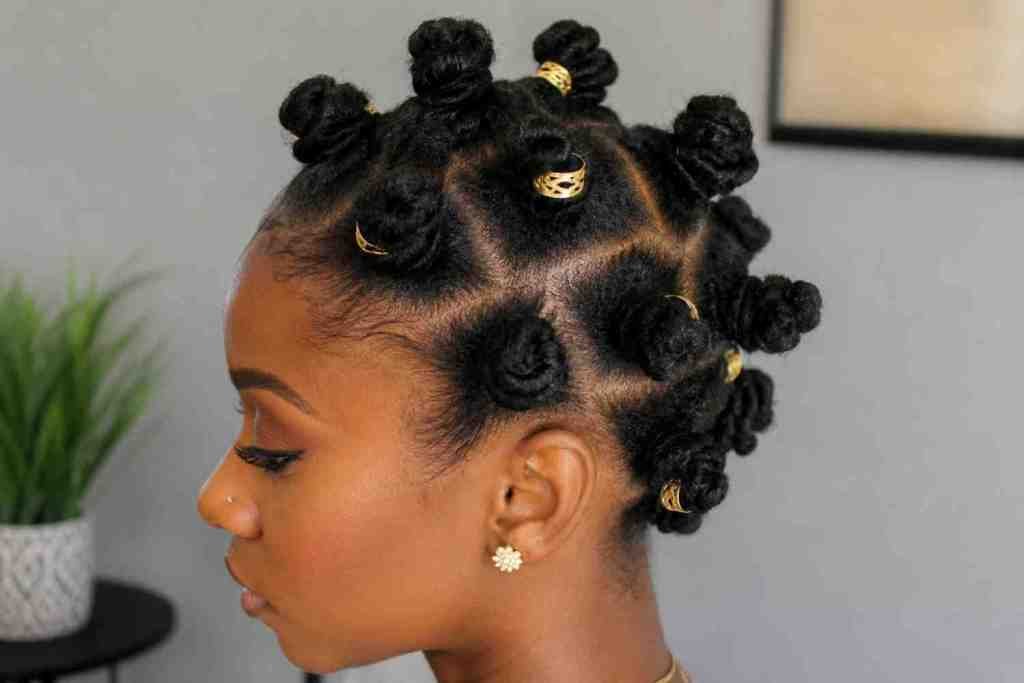
Bantu knots are created by twisting or wrapping sections of hair around themselves to form small coiled knots. They can be worn as a complete hairstyle or unravelled after drying to create a Bantu knot-out.
You can create small, evenly spaced knots for a detailed appearance or use larger sections for a more understated finish.
Bantu knots work with a range of natural hair lengths, although shorter hair may require smaller sections or a different wrapping technique.
Why they work: They keep the hair contained in sections and can reduce the need for daily combing while worn.
Styling tip: Avoid wrapping the hair too tightly. When creating a knot-out, make sure the hair is dry before unravelling to help the style retain its definition.
10. Flat Twists with a Puff

If you love the volume of a natural puff but want more detail around the front, flat twists leading into a puff are worth considering.
The front or sides of the hair are twisted close to the scalp, while the remaining hair is gathered into a puff at the crown or back of the head.
This creates a contrast between the smooth, structured twists and the fullness of the natural texture. It can be adapted for casual wear or dressed up with simple accessories.
Why it works: The twisted sections reduce the need to restyle the front repeatedly, while the puff showcases your natural texture.
Styling tip: Use a soft band or another gentle gathering method. Avoid repeatedly tightening the puff, as this can place unnecessary stress on the hairline.
11. Low Puff or Low Bun
A low puff or bun is a practical option when you want to keep your hair gathered without committing to a complex installation.
For a low puff, the hair is gathered towards the nape while its natural volume remains visible. A low bun takes the look a step further by securing the hair into a compact shape.
Both styles can work well for everyday activities, work settings and occasions where you prefer a simple, neat finish.
Why they work: They can keep the ends contained and make everyday styling more manageable.
Styling tip: Gather the hair gently and avoid using excessive gel or repeatedly brushing the edges into place. If your hair is tightly coiled, work with its natural texture instead of forcing it into a shape that creates tension.
12. High Puff with a Satin-Friendly Hair Tie
A high puff celebrates the volume and shape of natural hair. The hair is gathered towards the crown, creating a rounded silhouette that can look striking with minimal styling.
It is particularly useful when you want a quick hairstyle that highlights your natural texture. You can keep the edges simple, add a headband or use a scarf to introduce colour.
However, the repeated use of tight bands and forceful brushing can stress the hairline, so technique matters.
Why it works: It provides an easy styling option that can reduce the need for heat or extensive manipulation.
Styling tip: Use a soft, adjustable band and avoid pulling it excessively tight. Alternate the position of your puff if frequent gathering begins to cause discomfort.
13. Flat-Twist Crown
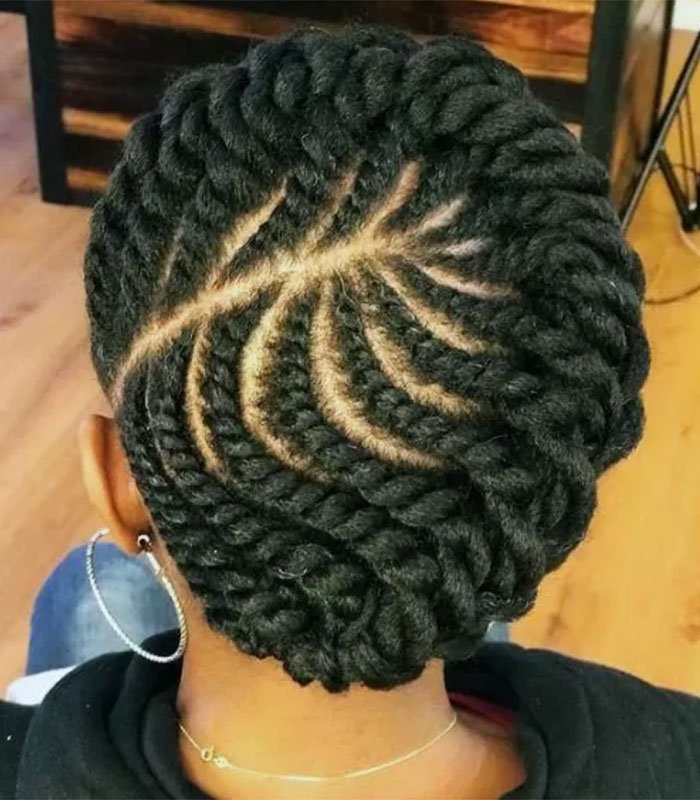
A flat-twist crown creates a circular or curved pattern around the head, giving the hairstyle a polished appearance. Depending on the design, the twists can meet at the back, form a halo-like arrangement or lead into a tucked finish.
This style is a good choice for occasions when you want something elegant without relying on extensions.
It can be adapted to different hair lengths, although shorter hair may require additional pins or a modified design to keep the twists secure.
Why it works: The hair is arranged close to the scalp, and the ends can be tucked away to limit friction.
Styling tip: Secure the twists with smooth pins and make sure they remain comfortable throughout the day. Remove the pins carefully to avoid snagging your hair.
14. Two-Strand Twists with Beads or Accessories
Accessories offer a simple way to personalise a protective style without changing the underlying technique. Two-strand twists can be decorated with lightweight beads, cuffs or other hair-safe ornaments to create a look that feels more expressive.
You can add a few accessories near the ends for a subtle effect or choose a more noticeable arrangement for a special occasion.
The key is to make sure the accessories do not pull on the twists or catch on clothing.
Why they work: The underlying twists keep the hair organised, while accessories add individuality.
Styling tip: Choose lightweight pieces with smooth edges, and remove any accessory that snags, feels heavy or causes discomfort.
15. The Tucked Natural-Hair Updo

A tucked updo is a versatile way to gather natural hair into a polished style while keeping the ends contained. Depending on your hair length, you can create a low roll, a folded bun, a pinned crown or a combination of twists and tucked sections.
This style works particularly well for occasions when you want a refined finish without extensions. It can also be adapted to different textures and lengths using hair-friendly pins and gentle sectioning.
Why it works: Tucking the ends away can help reduce friction against clothing and other surfaces.
Styling tip: Use enough pins to secure the style without forcing the hair into a tight shape. Remove the pins gently at the end of the day and avoid sleeping in an uncomfortable updo.
How to Choose the Right Protective Hairstyle for 4C Hair
Not every protective style will suit every person. The right choice depends on your hair length, scalp comfort, schedule and preferred appearance.
Consider how much time you have
Twists, puffs and simple buns can be relatively quick to create once you are familiar with the technique. Mini twists, intricate cornrows and extension-based styles may require substantially more installation time.
Choose a style that fits your routine rather than one that becomes difficult to maintain.
Think about your hair’s needs
Natural hair can be prone to tangling and breakage, particularly when it is handled roughly or allowed to become severely tangled. A style that reduces repeated manipulation may be helpful, but your hair still needs appropriate cleansing, conditioning and gentle handling.
Be mindful of tension
Tight braids, heavy extensions and repeatedly pulled-back styles can contribute to traction-related hair loss. This is especially important around the edges and temples.
A protective style should feel secure, not painful. Persistent soreness, headaches, bumps or thinning are reasons to reassess the style.
Choose a manageable wear period
Longer-lasting styles are not necessarily better for your hair. The appropriate wear period depends on the style, how well it is maintained and how your scalp and hair respond.
Remove the style when it becomes difficult to maintain, develops significant tangling or causes discomfort. Avoid leaving extensions installed simply because they still look presentable.
How to Care for Natural and 4C Hair While Wearing Protective Styles
Protective styling works best as part of a consistent hair-care routine.
- Cleanse your scalp regularly. Choose a washing schedule that suits your scalp and style. Use products appropriate for your hair and follow any specific care instructions for extensions.
- Condition your hair appropriately. Natural hair still needs conditioning even when it is styled. Plan to condition it properly between protective styles.
- Handle your hair gently. Detangle in manageable sections when needed, using suitable slip and a technique that minimises pulling.
- Reduce friction at night. A satin or silk bonnet, scarf or pillowcase can help reduce friction and tangling.
- Avoid excessive heat and manipulation. Repeated heat styling, forceful brushing and constant restyling can undermine the benefits of a low-manipulation routine.
- Pay attention to your scalp. Itching, persistent redness, bumps, tenderness or unusual hair loss should not be dismissed as normal parts of protective styling.
- Give your hair a chance to recover between styles. After removing extensions or long-term styles, inspect your hair gently, cleanse and condition it, and avoid immediately reinstalling a tight or heavy style if your scalp feels tender.
Do Protective Hairstyles Make 4C Hair Grow Faster?
Protective hairstyles do not directly make hair grow faster. Hair growth occurs at the follicle, and the rate is influenced by factors such as genetics, health and individual biology.
The potential benefit of a well-chosen protective style is that it may reduce avoidable breakage and manipulation, helping you retain more of the length your hair naturally grows.
However, a tight or poorly maintained style can cause breakage and traction-related hair loss instead. For that reason, comfort, gentle handling and scalp care matter more than how long a hairstyle lasts.
If you notice persistent thinning, bald patches, scalp pain or other concerning changes, consult a qualified healthcare professional or dermatologist rather than relying on styling changes alone.
Final Thoughts
Protective hairstyles offer many ways to enjoy natural and 4C hair, from simple two-strand twists and natural puffs to knotless braids, crochet styles and elegant updos.
The most suitable option is one that works with your hair’s needs, fits your lifestyle and allows you to maintain a healthy scalp. You do not need extensions or an elaborate hairstyle to care for natural hair effectively.
Start with a style you can comfortably maintain, handle your hair gently and remember that the purpose of protective styling is to reduce unnecessary stress—not to create a look that comes at the expense of your hair.
For more inspiration, explore the Hairstyles & Trends section of Tress & Trend for styling ideas, and visit Hair Care for practical guidance on building a routine for natural and textured hair.
Editorial note: Protective styling does not guarantee prevention of breakage or hair loss. Results depend on installation, tension, maintenance and individual hair and scalp needs.



2 thoughts on “15 Protective Hairstyles for Natural and 4C Hair”