

Braids are a beautiful, versatile way to style natural hair while reducing the need for daily manipulation. Whether you prefer knotless braids, box braids, cornrows, Fulani braids or boho styles, the right care routine can help keep your scalp comfortable and your natural hair in better condition.
However, wearing braids does not mean your hair should be neglected until take-down day. Your scalp still needs cleansing, your natural hair needs appropriate moisture, and your edges need protection from excessive tension. The extensions themselves may look neat, but what matters just as much is the health of the hair underneath.
The good news? You do not need an elaborate collection of products to care for your hair in braids. A few consistent habits can help you maintain your style while reducing unnecessary dryness, buildup and breakage.
1. Start With the Right Braiding Technique
Taking care of your hair while wearing braids begins before the installation is complete. The way your braids are installed can affect your scalp comfort and the amount of tension placed on your natural hair.
Avoid braids that are too tight
Braids should feel secure without pulling painfully at your scalp. If your scalp hurts, your head aches, or you notice bumps around your hairline immediately after installation, your braids may be too tight.
Do not assume that pain is a normal part of getting your hair braided. Ask your stylist to loosen or redo the affected sections. If the style continues to cause pain or irritation, remove it rather than trying to endure the discomfort.
Repeated tension from tight braids, heavy extensions or tightly pulled hairstyles can cause traction alopecia, a form of hair loss associated with prolonged pulling on the hair follicles. Early damage may improve when the tension stops, but longstanding damage can become permanent.
Choose a suitable braid size and length
Long, heavy braids can place additional weight on your natural hair, especially around the hairline. If your hair is fragile or you have noticed thinning around your edges, consider shorter braids, a lighter extension option or a style that does not place much tension on your scalp.
The smallest braids are not automatically the best choice. Your stylist should consider your hair density, condition and the strength of your roots when recommending a size.
Protect your edges
The hair around your hairline is particularly vulnerable to tension. Avoid having delicate edge hairs pulled tightly into braids simply to achieve a neat finish.
You can also reduce stress on your hairline by avoiding tight ponytails, buns and updos while wearing braids. A style that looks elegant should not require your scalp to hurt.
2. Keep Your Scalp Clean
One common mistake people make while wearing braids is avoiding shampoo altogether. They may worry that washing will cause frizz, loosen the style or make the braids look old.

Although excessive manipulation can affect the appearance of your braids, neglecting scalp hygiene is not the answer. Sweat, dead skin cells, sebum and styling products can accumulate on your scalp over time.
How to wash your scalp with braids
You can wash your hair without unnecessarily disturbing your style by following these steps:
- Dilute your shampoo if appropriate. Mix a small amount of shampoo with water in an applicator bottle if this makes it easier to distribute. Follow the product instructions and avoid diluting a formula that is not intended for it.
- Wet your scalp and braids gently. Use lukewarm water and allow the water to reach your scalp.
- Apply shampoo along your parts. Concentrate on the scalp rather than rubbing the full length of every braid together.
- Clean with your fingertips. Use gentle movements to loosen dirt and buildup. Avoid scratching with your fingernails or aggressively rubbing the braids.
- Rinse thoroughly. Pay attention to the roots and the spaces between braids so shampoo does not remain on your scalp.
- Squeeze out excess water. Press the braids gently with a clean towel instead of rubbing them vigorously.
- Allow the braids to dry completely. Give the roots and the lengths enough time to dry before covering your hair or going to bed.
If your braids are very long or thick, drying may take longer than you expect. A clean, absorbent towel can remove excess water, and a blow-dryer on a cool or low-heat setting may help if needed.
Avoid leaving the roots damp for extended periods, particularly if your braids are dense and take a long time to dry.
How often should you wash braids?
There is no single washing schedule that suits everyone. Your scalp, activity level, climate and product use all matter.
If you exercise frequently, sweat heavily or have a scalp condition that requires regular cleansing, you may need to wash more often. If your scalp stays relatively clean and comfortable, you may need fewer washes.
The goal is to keep your scalp clean without excessive friction or unnecessary manipulation. If you have a diagnosed scalp condition, follow the treatment and washing advice provided by your healthcare professional.
3. Moisturise Your Natural Hair Without Creating Buildup

Your natural hair remains underneath your braids, so it still needs appropriate care. Depending on your hair texture, condition and the products you use, your hair may become dry during a long-term protective style.
However, applying large amounts of oil, grease or leave-in products does not automatically make your hair healthier. Heavy application can leave residue around the roots and make it harder to keep your scalp clean.
Choose lightweight products
A lightweight, water-based leave-in product may help maintain moisture in your natural hair. A small amount of a suitable hair oil can help reduce friction or improve lubrication, but oil should not be treated as a substitute for water or conditioning.
Choose products that are easy to distribute between your parts and that do not leave your scalp feeling coated.
You do not need to use every product marketed for protective styles. Start with a simple routine and add products only when you have a clear reason to do so.
How to moisturise hair while wearing braids
Follow these steps when your natural hair feels dry:
- Make sure your scalp and hair are clean enough for the products you intend to apply.
- Use a lightweight water-based moisturising product or leave-in conditioner suitable for your hair.
- Apply a small amount along accessible parts and to the natural hair within the braids, as appropriate for your style.
- Avoid soaking the braids or saturating the roots with product.
- Allow your hair and braids to dry fully before covering them.
If you use an oil afterward, apply only a small amount where it is useful. More product does not necessarily mean more moisture.
A useful distinction: your scalp and hair are not the same thing. If your scalp feels oily but your hair feels dry, adding more oil everywhere may not solve the problem. You may need to adjust how you cleanse and condition your hair instead.
For a more detailed explanation of moisturising without excessive residue, read our guide to How to Moisturise Natural Hair Without Making It Greasy.
4. Avoid Scratching and Irritating Your Scalp
An itchy scalp can make wearing braids uncomfortable, but scratching aggressively may irritate the skin and damage fragile hair around the roots.
First, consider what may be causing the itch. Common possibilities include dryness, product residue, irritation from a hair product or an underlying scalp condition.
What to do when your scalp itches
- Check whether your scalp needs gentle cleansing.
- Avoid applying several new products at once, especially if you suspect a reaction.
- Use your fingertips gently rather than scratching with your nails.
- Avoid tight head coverings that create uncomfortable friction.
- Stop using products that cause burning, redness or worsening irritation.
Some people experience irritation after installing synthetic extensions. If you suspect that your extension hair is triggering a reaction, speak with a qualified stylist or healthcare professional about the appropriate next step.
Do not assume that every itchy scalp is simply dry. Persistent itching, significant flaking, redness, swelling, sores or pain may require medical assessment.
Avoid using strong oils, concentrated essential oils or harsh home remedies directly on an irritated scalp. These can worsen irritation in some people.
5. Be Careful With Oils, Grease and Scalp Sprays
Scalp oils and braid sprays are popular because they can make braids feel softer and improve the appearance of the style. However, they are optional, not compulsory.
Using several products together can lead to buildup, particularly when the scalp is not washed regularly.
Should you oil your scalp while wearing braids?
You do not have to oil your scalp simply because you are wearing braids. If your scalp feels comfortable and is not excessively dry, you may not need a scalp oil at all.
If you choose to use one, apply a small amount and observe how your scalp responds. Stop using it if it causes itching, redness, irritation or a greasy residue that is difficult to remove.
Remember that oils do not directly make hair grow faster. Healthy hair growth depends on several factors, including genetics, overall health and the condition of the scalp. A product that makes your hair feel softer is not necessarily a hair-growth treatment.
Signs you may be using too much product
Watch for these signs:
- A sticky or waxy layer around your roots.
- White or coloured residue collecting along your parts.
- Braids that feel greasy shortly after application.
- Persistent itching despite applying more oil.
- Product that is difficult to remove during washing.
If you notice these signs, simplify your routine and cleanse your scalp gently. Avoid repeatedly layering fresh products over old residue.
6. Protect Your Braids While Sleeping
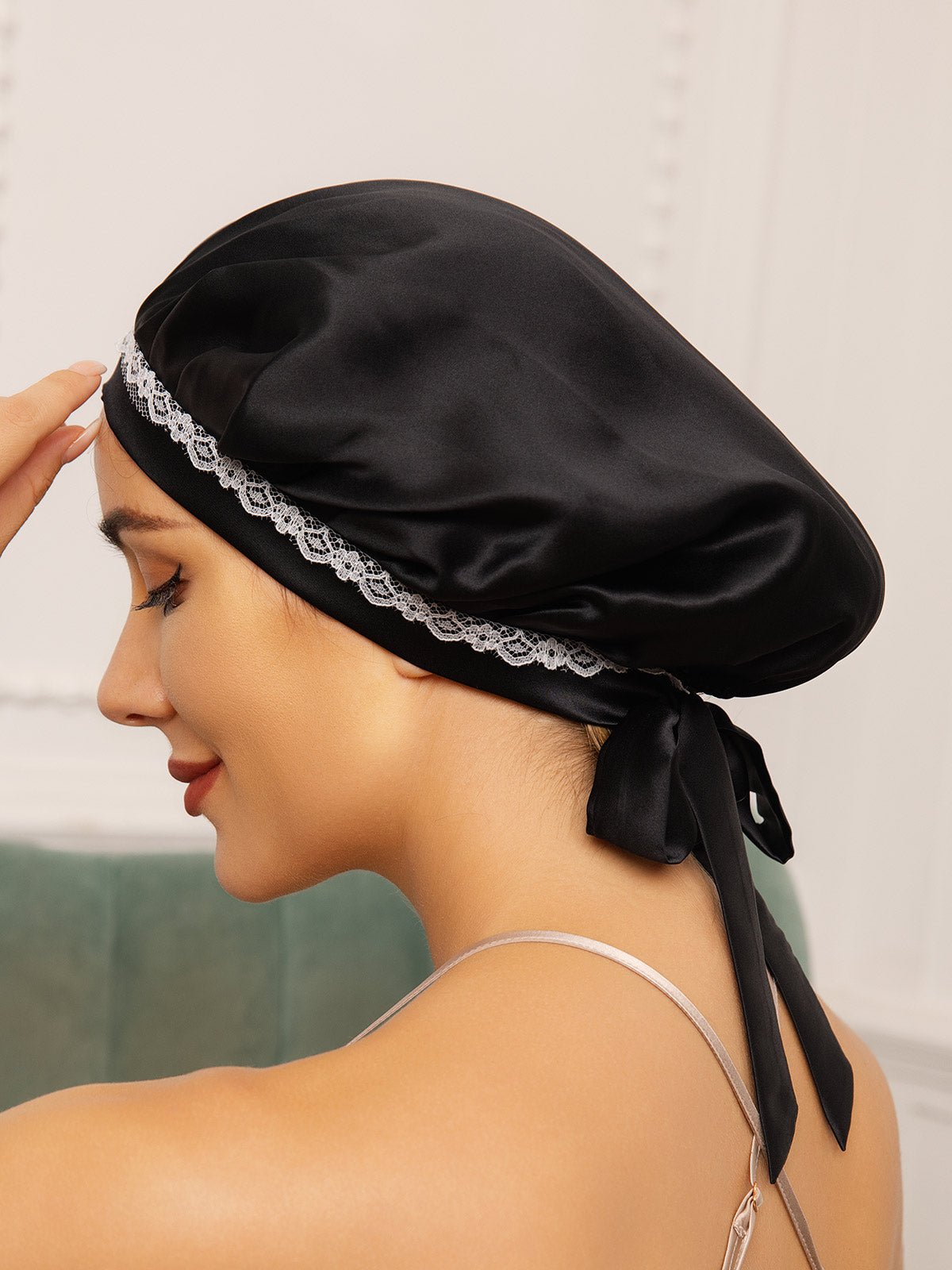
Night-time care can help reduce friction, preserve the appearance of your braids and make your routine easier.
Cotton pillowcases and rough fabrics may create friction as you move during sleep. A satin or silk scarf, bonnet or pillowcase can provide a smoother surface for your hair.
A simple night-time routine
- Gather your braids loosely if they are long enough to need securing.
- Avoid pulling them into a tight ponytail or bun.
- Cover your hair with a comfortable satin or silk bonnet or scarf.
- Alternatively, use a satin or silk pillowcase.
- Make sure your scalp and roots are dry before covering your hair after washing.
The key is to reduce friction without creating additional tension. If a bonnet feels too tight around your hairline, choose a looser option.
You do not need to wrap your braids tightly every night to keep them neat. A comfortable covering and gentle handling are usually sufficient.
7. Avoid Constantly Styling Your Braids Into Tight Updos
One advantage of braids is that they can be styled in many ways. You can wear them down, create a half-up, half-down look, or gather them into a bun or ponytail.
However, repeatedly pulling the braids into tight styles can place extra stress on your roots, especially if the extensions are long or heavy.
Try lower-tension styling options
- Wear your braids loose over your shoulders.
- Choose a relaxed half-up, half-down style.
- Use a loose, low ponytail.
- Create a soft bun without pulling the roots tightly.
- Alternate your parting and styling direction when practical.
If a particular style causes tenderness around your temples, nape or hairline, loosen it or choose another option.
Even if the braids themselves were installed comfortably, styling them tightly every day can introduce additional tension. Protective styling should reduce unnecessary stress, not create it.
8. Know When It Is Time to Remove Your Braids
It can be tempting to keep braids for as long as possible, particularly when the installation was expensive or the style still looks attractive. However, a neat appearance does not necessarily mean the style should remain installed.
As new hair grows, the roots become more exposed, and loose hair and product residue may accumulate. Older braids may also become harder to maintain without additional manipulation.
The appropriate wear time depends on the braid type, installation method, weight, hair condition and scalp response. For many extension-braid styles, around six weeks is a useful conservative target; avoid extending the style simply because it still looks good. Follow advice specific to your hairstyle and hair condition.
Signs it is time to take your braids down
Consider removing your braids if you notice:
- Persistent scalp pain or tenderness.
- Increasing tension around your hairline.
- Thinning edges or visible hair breakage.
- Significant matting at the roots.
- Buildup that you cannot comfortably remove.
- Persistent itching, irritation or sores.
- Excessive frizz or new growth that makes the style difficult to maintain.
If you notice thinning or signs of traction alopecia, remove the source of tension and seek advice from a dermatologist or another qualified healthcare professional. Do not wait for the style to become completely worn out.

9. Take Down Your Braids Gently
Your hair can be particularly vulnerable during take-down because shed hairs may have remained trapped within the braids. When you finally remove the extensions, you may see a noticeable amount of loose hair.
This does not automatically mean that your hair has been damaged. Hair naturally sheds, and some shed strands may remain caught within the style until removal.
The important thing is to avoid turning normal shedding into additional breakage through rushed detangling.
How to remove braids without unnecessary breakage
Step 1: Set aside enough time. Rushing can encourage pulling, rough detangling and unnecessary breakage.
Step 2: Remove extensions carefully. Work from the ends upward where appropriate, using scissors only when you can clearly distinguish the extension hair from your natural hair. Never cut blindly near your own strands.
Step 3: Separate the natural hair gently. Once a braid is undone, use your fingers to loosen shed hairs and small tangles before moving to the next section.
Step 4: Work in manageable sections. If your hair is tightly coiled, sectioning can make detangling more controlled and reduce unnecessary pulling.
Step 5: Cleanse and condition. Wash your scalp and hair gently, then use a suitable conditioner to improve slip and make detangling easier.
Step 6: Detangle patiently. Use your fingers or an appropriate wide-tooth comb, working from the ends toward the roots. Add conditioner or a suitable detangling product if needed.
Step 7: Give your hair a break. Consider a comfortable, low-manipulation style before installing another heavy or tension-prone style.
If you discover bald patches, substantial thinning, persistent scalp pain or sores, seek professional advice rather than immediately installing another set of braids.
10. Give Your Hair a Break Between Braiding Sessions
Protective styling can make hair management more convenient, but wearing one tension-producing style continuously does not give your scalp and hairline much opportunity to recover.
Between installations, consider loose twists, a gentle puff, a low-manipulation updo or another style that does not place excessive pressure on your roots.
Use the break to assess your hair. Are your edges becoming thinner? Does your scalp feel irritated? Are you experiencing more breakage than usual? These observations can help you decide whether your next hairstyle needs to be lighter, shorter or less tension-prone.
If your hair is already showing signs of damage, avoid immediately reinstalling extensions over the affected areas. Persistent thinning or hair loss deserves professional assessment.
A Simple Hair-Care Schedule for Braids
You do not need a complicated routine to care for your hair while wearing braids. Use the following schedule as a starting point and adjust it to your scalp, activity level and hairstyle.
| When | What to do | Why it matters |
|---|---|---|
| Daily | Check for discomfort, unusual itching or tension. Keep your styling gentle. | Helps you recognise problems early. |
| As needed | Apply a small amount of a suitable moisturising product to dry natural hair. | Helps manage dryness without excessive product use. |
| Regularly, according to your needs | Cleanse your scalp and braids gently. | Removes sweat, sebum and product residue. |
| After washing | Dry your roots and braids thoroughly. | Prevents prolonged dampness. |
| Every night | Use a comfortable satin or silk covering or pillowcase. | Reduces friction during sleep. |
| Throughout the style | Avoid tight updos and heavy, tension-producing styling. | Reduces stress on your roots and edges. |
| Around six weeks for many extension-braid styles, or sooner if needed | Assess whether it is time to remove the braids. | Helps prevent prolonged tension and makes maintenance manageable. |
| After take-down | Detangle gently, cleanse, condition and assess your hair. | Prepares your hair for its next style. |
This is a flexible guide rather than a rigid timetable. Your scalp’s condition and the needs of your natural hair should take priority over maintaining a particular look for a set number of weeks.
Common Mistakes to Avoid While Wearing Braids
Even with a good routine, a few habits can undermine your efforts to keep your hair healthy.
1. Treating scalp pain as normal
Pain, persistent tenderness and headaches after installation can indicate excessive tension. Ask for the braids to be loosened or remove them if the problem cannot be corrected.
2. Avoiding shampoo completely
A style that looks neat can still accumulate sweat, sebum and product residue. Cleanse your scalp gently as needed instead of allowing buildup to continue unchecked.
3. Applying too much oil
Heavy layers of oil and grease may leave residue without addressing the cause of dryness. Use products sparingly and focus on a routine that includes appropriate cleansing and conditioning.
4. Pulling braids into tight styles every day
Repeatedly styling braids into tight ponytails and buns can add tension to the roots. Choose relaxed styles and give your hairline a break.
5. Keeping braids installed for too long
The longer a style remains installed, the more difficult it may become to manage new growth, buildup and tangling. Remove braids when they need to come down rather than waiting until they look severely worn.
6. Ignoring thinning edges
Thinning around the temples or hairline can be an early warning sign of traction-related damage. Do not cover the problem with another tight style. Remove the tension and seek professional advice if thinning persists.
7. Assuming every protective style protects every head of hair
A hairstyle is not automatically protective because it keeps the hair tucked away. Its effect depends on the tension, weight, installation, duration and care routine. A loose, lightweight style may be more suitable than a heavy, tightly installed one.
Frequently Asked Questions
Can I wash my hair while wearing braids?
Yes. You can wash your scalp and braids while they are installed. Use a gentle shampoo, concentrate on cleaning the scalp, rinse thoroughly and allow the braids to dry completely. Adjust your washing frequency to your scalp, activity level and product use.
Should I moisturise my hair every day while wearing braids?
Not necessarily. How often you need to moisturise depends on your hair’s condition, the products you use and your environment. If your hair feels dry, apply a small amount of a suitable moisturising product. Avoid applying products automatically when your hair and scalp do not need them.
Is it normal for my scalp to itch after getting braids?
Mild discomfort can have several causes, but persistent itching should not be dismissed as normal. It may be associated with tension, dryness, residue, product irritation or an underlying scalp condition. Avoid scratching aggressively, simplify your products and seek professional advice if the itching continues or is accompanied by redness, sores or swelling.
Do braids help natural hair grow?
Braids do not directly make hair grow faster. They may help some people retain length by reducing daily manipulation, but the benefit depends on how the style is installed and maintained. Tight or heavy braids can cause breakage and traction alopecia, so a protective style must be comfortable and low-tension to be beneficial.
How long should I keep my braids in?
The appropriate duration varies by style and individual hair condition. Around six weeks is a reasonable conservative target for many extension-braid styles, but you may need to remove yours sooner if you experience pain, irritation, excessive buildup, matting or thinning. Do not keep braids installed longer simply because they still look neat.
Can I use hair growth oil on my edges while wearing braids?
You can use a suitable product if your scalp tolerates it, but hair growth oils are not guaranteed to stimulate growth or reverse traction-related damage. The priority is to remove excessive tension, avoid irritating products and seek professional advice if your edges are thinning.
Why does so much hair come out when I remove my braids?
Loose hairs can remain trapped in braids throughout the installation period, so they may come out together during take-down. This can make normal shedding look more dramatic. However, if you notice bald patches, substantial thinning, persistent breakage or scalp symptoms, seek professional assessment.
Are knotless braids better for your hair?
Knotless braids can reduce some of the concentrated tension associated with traditional braiding techniques, depending on how they are installed. However, they are not automatically damage-free. Tight parts, heavy extensions, excessive length and tight updos can still place stress on the hair and scalp.
Final Thoughts
Taking care of your hair while wearing braids does not have to be complicated. Keep your scalp clean, moisturise your natural hair when needed, use products sparingly, protect your edges and avoid styles that place excessive tension on your roots.
Just as importantly, pay attention to what your scalp is telling you. Persistent pain, irritation or thinning is a reason to change your hairstyle, not something to endure for the sake of appearance.
Braids should make your routine easier while allowing you to enjoy your style. With thoughtful installation, gentle maintenance and careful take-down, you can make protective styling a more comfortable part of your hair-care routine.


2 thoughts on “How to Take Care of Your Hair While Wearing Braids”