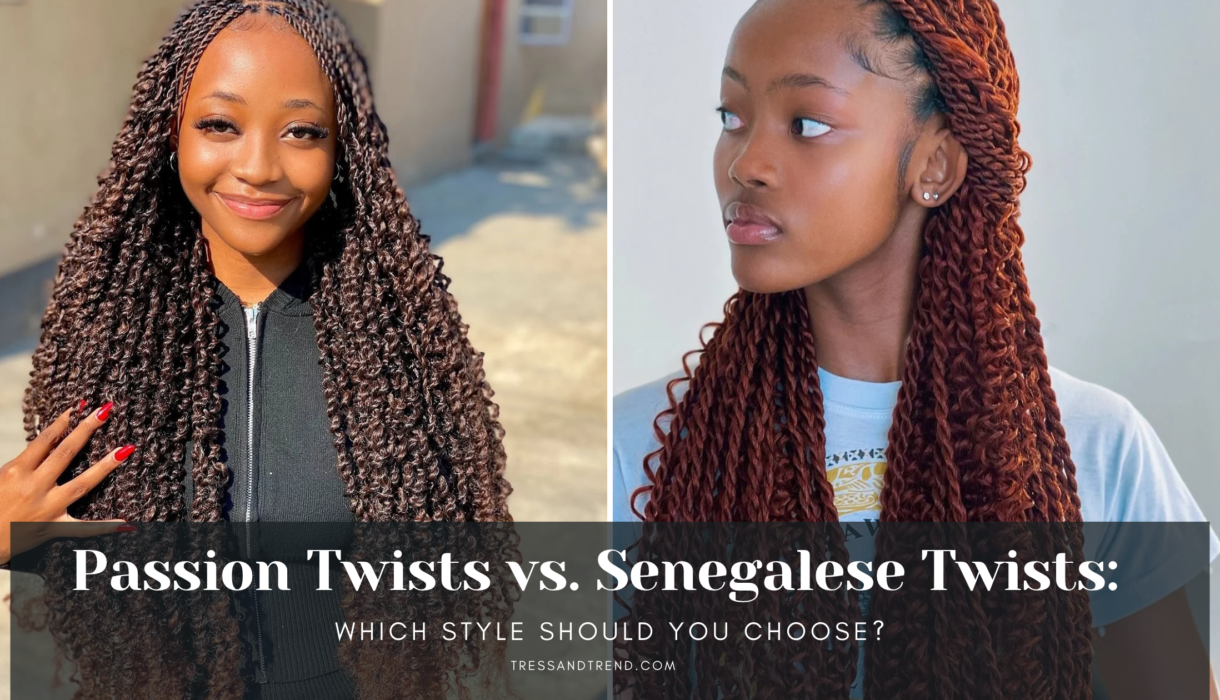
Passion Twists vs. Senegalese Twists: Which Style Should You Choose?
Posted in :

Choosing between passion twists and Senegalese twists comes down to the look you love, how much maintenance you can manage and how long you want your hairstyle to last. Passion twists offer a soft, textured finish, while Senegalese twists are known for their sleek, rope-like appearance. Both can be beautiful protective styles, but they differ in texture, styling versatility and upkeep.
If you are unsure which one to choose, this guide breaks down the differences to help you find the right style for your hair and lifestyle.
What Are Passion Twists?

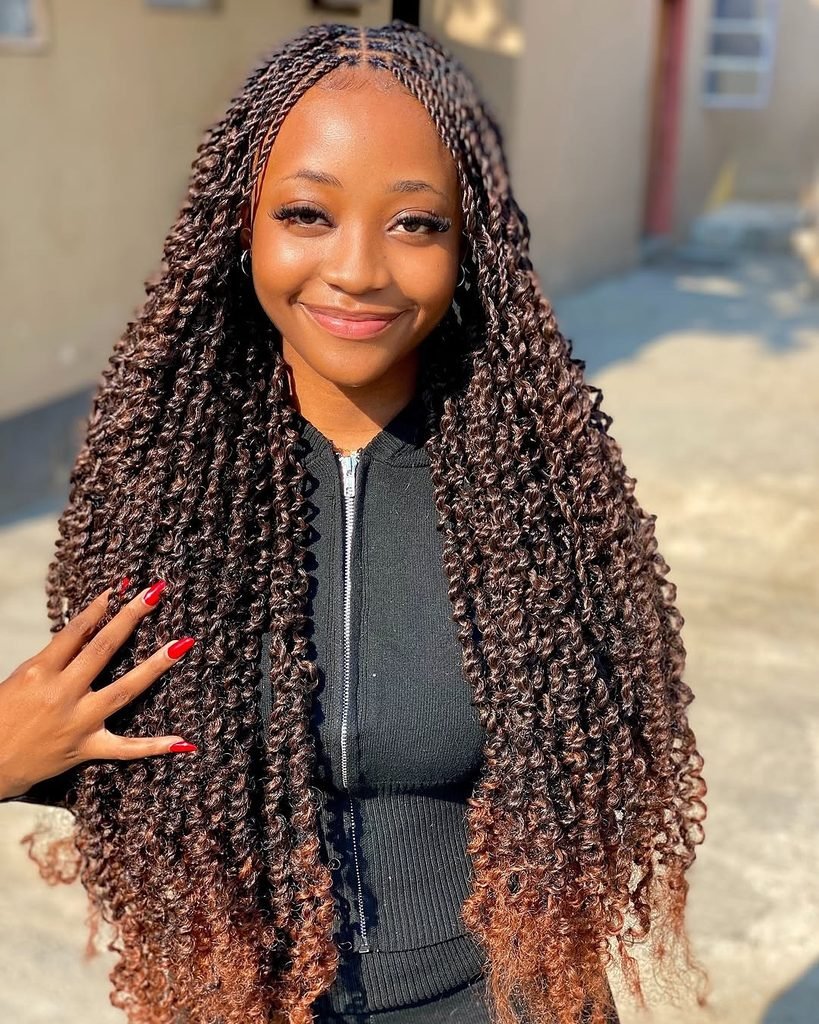
Passion twists are a two-strand twist hairstyle created using wavy or curly extension hair. The textured extensions give each twist a soft, slightly undone appearance with plenty of movement and volume.
Unlike smoother twist styles, passion twists embrace a relaxed, bohemian finish. Their texture makes them especially appealing if you enjoy hairstyles that look full and effortless rather than perfectly uniform.
You can wear passion twists in different lengths, sizes and colours. They also work well with half-up hairstyles, high buns and ponytails, making them a versatile option for everyday wear and special occasions.
What makes them distinctive: Their soft, curly texture and relaxed, boho-inspired appearance.
What Are Senegalese Twists?

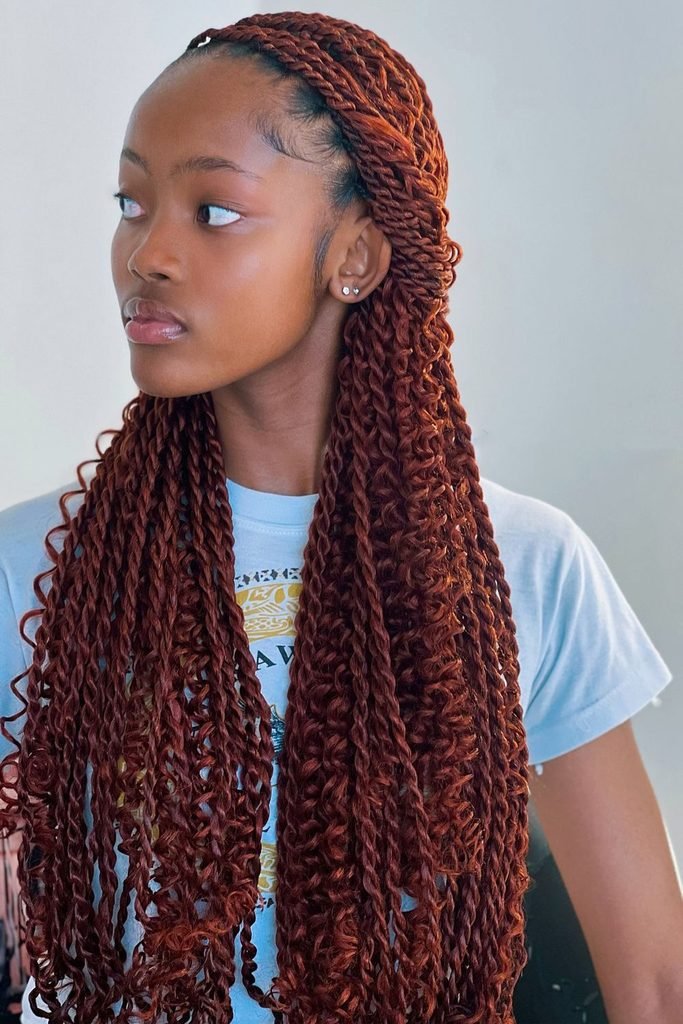
Senegalese twists are created by twisting two sections of hair together, usually with smooth braiding extensions. This technique produces neat, defined twists with a rope-like appearance.
The finish is generally sleek and uniform, making Senegalese twists a good choice if you prefer a polished hairstyle. They can be worn short or long, thin or thick, depending on your desired look.
Senegalese twists also offer considerable styling versatility. You can wear them loose, gather them into a ponytail or bun, or experiment with half-up hairstyles.
What makes them distinctive: Their smooth texture, defined shape and elegant, rope-like finish.
Passion Twists vs. Senegalese Twists: Key Differences
Although both hairstyles use a two-strand twisting technique, the type of extension hair and the resulting texture make them look quite different.
| Feature | Passion Twists | Senegalese Twists |
|---|---|---|
| Appearance | Soft, textured and bohemian | Sleek, smooth and polished |
| Extension hair | Usually wavy or curly | Usually smooth braiding hair |
| Texture | Fluffy, irregular and slightly undone | Uniform and rope-like |
| Overall finish | Relaxed and voluminous | Neat and defined |
| Styling options | Casual, boho and romantic looks | Elegant, classic and versatile looks |
| Maintenance | Loose texture may require extra attention to frizz and tangling | Smooth twists may be easier to keep uniform, although roots still need care |
| Longevity | Often around 4–6 weeks, depending on installation and maintenance | Often around 6–8 weeks, depending on installation and maintenance |
| Best suited to | People who love textured, effortless hairstyles | People who prefer sleek, structured hairstyles |
These wear-time ranges are estimates, not guarantees. The installation method, twist size, hair growth, scalp condition and maintenance routine all influence how long either style remains suitable to wear.
5 Major Differences Between Passion Twists and Senegalese Twists
1. Texture and Appearance
The most noticeable difference is texture.
Passion twists have a soft, wavy or curly appearance because they are usually made with textured extension hair. The twists may look slightly irregular, giving them a relaxed finish that works well with bohemian and natural-inspired outfits.
Senegalese twists, on the other hand, have a smoother, more defined appearance. Their rope-like structure creates a uniform finish that can look particularly striking when the twists are long and neatly installed.
Choose passion twists if you love texture, volume and a relaxed aesthetic.
Choose Senegalese twists if you prefer a sleek, polished hairstyle with clearly defined twists.
2. Installation and Extension Hair
Both styles involve twisting two sections of hair together, but the extension hair used influences the final result.
Passion twists typically require wavy or curly extension hair, often sold as water-wave or passion-twist hair. The texture gives the twists their characteristic fullness and movement.
Senegalese twists generally use smooth braiding extensions that create a more uniform, rope-like finish.
Installation time varies according to the size and length of the twists, the amount of hair used and the stylist’s technique. Smaller or longer twists usually require more work than larger, shorter ones.
If you are planning your appointment, ask your braider which extension hair to purchase and how long the installation is likely to take.
3. Maintenance and Upkeep
Both hairstyles require scalp care, gentle handling and nighttime protection, but their different textures affect their maintenance needs.
Passion twists can become frizzy or tangled as their textured strands loosen with wear. Loose curls may need occasional gentle separation, and excessive touching can make the style look less defined.
Senegalese twists generally maintain a more uniform appearance, although new growth, friction and product buildup can affect their neatness. The roots still need cleaning and care, even when the twists themselves look tidy.
For either style, use a satin or silk bonnet or pillowcase to reduce friction while sleeping. Clean your scalp regularly and avoid applying excessive oils or heavy products that may cause buildup.
The bottom line: Senegalese twists may be easier to keep looking uniform, while passion twists may require more attention to their loose texture.
4. Longevity
If you want a hairstyle that remains neat for as long as reasonably possible, longevity may influence your decision.
Passion twists often remain presentable for approximately four to six weeks, although the textured extensions may begin to look frizzy sooner, depending on the installation and your maintenance routine.
Senegalese twists may remain neat for around six to eight weeks under suitable conditions. Their smoother texture can help preserve a more uniform appearance, but this does not mean they should be left in indefinitely.
Your hair’s condition matters more than reaching a particular number of weeks. Remove either style if it causes discomfort, excessive tangling or damage around your roots and edges.
5. Styling Versatility
Both styles offer numerous ways to change your look without removing your twists.
Passion twists work beautifully in loose, flowing styles that showcase their texture. Senegalese twists can create equally striking looks, especially when arranged into sleek updos or long ponytails.
Your preferred aesthetic may help you decide which one to choose.
If you enjoy soft curls, loose movement and bohemian outfits, passion twists may be the better match. If you prefer clean lines, defined twists and more structured hairstyles, Senegalese twists may suit you better.
Neither style is limited to one type of outfit or occasion. The size, length, colour and way you arrange the twists can transform the final look.
Which Style Is Better for Your Hair?
Neither passion twists nor Senegalese twists is automatically better for natural hair. Their suitability depends on your hair’s condition, the installation technique, the weight of the extensions and how well you maintain the style.
Here are a few considerations to help you decide.
If You Have Natural or 4C Hair
Both styles can be installed on natural or 4C hair, provided your hair is long enough for the chosen technique and is in suitable condition.
Before installation, make sure your hair is clean, detangled and properly conditioned. Discuss the size and weight of the twists with your braider, especially if your hair is fragile or prone to breakage.
Do not assume that one style will automatically help your hair grow faster. Hair growth occurs at the scalp; a well-maintained protective style may help you retain length by reducing manipulation, but tight or heavy twists can cause damage.
If Your Hair Is Fragile or Your Edges Are Thinning
Prioritise low tension, manageable length and lightweight extensions rather than choosing based on appearance alone.
Both styles can place stress on your hair if they are installed too tightly or made excessively heavy. Repeated pulling can cause traction alopecia, a form of hair loss associated with tension on the hair follicles.
If your hairline is already thinning, consult a qualified dermatologist or healthcare professional and discuss lower-tension styling options with your braider.
If You Prefer a Lightweight Hairstyle
Neither style is always lighter than the other. Weight depends on the extension hair, the number of twists, their thickness and their length.
Long, dense twists can feel heavy regardless of the style. If comfort is a priority, consider shorter twists, lighter extension hair and a size that suits your natural hair.
Ask your braider about the approximate weight of the finished style before installation.
If You Want a Style for Work and Everyday Activities
Both hairstyles can work well for everyday life, professional settings and social occasions.
Senegalese twists may appeal to you if you prefer a neat, structured finish that is easy to arrange into a bun or ponytail. Passion twists may be a better fit if you enjoy a softer appearance that complements relaxed, casual outfits.
Your workplace dress code, exercise routine and personal preferences should guide your choice.
How to Care for Passion Twists and Senegalese Twists
Whichever style you choose, proper maintenance helps keep your scalp comfortable and your natural hair in good condition.
- Clean your scalp regularly. Use a gentle shampoo or suitable scalp-cleansing product, and rinse thoroughly to remove sweat and product residue.
- Moisturise your natural hair as needed. A lightweight leave-in product may help keep exposed hair from feeling dry. Avoid applying excessive product to the twists.
- Protect your hairstyle at night. Use a satin or silk bonnet, scarf or pillowcase to reduce friction.
- Handle the roots gently. Avoid scratching aggressively or pulling at new growth.
- Avoid excessive tension. Do not repeatedly wear tight ponytails or buns that pull on your hairline.
- Remove the twists carefully. Take your time during takedown, gently detangle shed hair and avoid rushing through the process.
- Give your hair a break between installations. Consider wearing a lower-manipulation style that does not place repeated tension on the same areas.
Your hairstyle should not cause persistent pain, stinging, bumps or headaches. These can be warning signs that the installation is too tight or heavy. Ask your stylist to loosen the affected areas or remove the style if necessary.
For additional guidance, read our articles on How to Take Care of Your Hair While Wearing Braids and How to Reduce Hair Breakage and Retain Length.
Frequently Asked Questions
Are Passion Twists Better Than Senegalese Twists?
Neither style is universally better. Passion twists are ideal if you prefer a soft, textured, bohemian appearance, while Senegalese twists suit people who want a smoother, more defined finish. Your preferred look, maintenance routine, hair condition and desired wear time should guide your decision.
Which Lasts Longer: Passion Twists or Senegalese Twists?
Senegalese twists often maintain their neat appearance longer, with many installations lasting around six to eight weeks. Passion twists commonly last around four to six weeks. However, these are estimates, and installation quality, maintenance, hair growth and scalp condition can affect longevity.
Which Style Is Easier to Maintain?
Senegalese twists may be easier to keep looking uniform because their extension hair is generally smoother. Passion twists can require more attention to loose curls and frizz. Both styles need regular scalp cleansing, nighttime protection and gentle handling.
Can You Install Passion Twists or Senegalese Twists on Short Hair?
Yes, both may be possible on shorter natural hair, depending on its length, condition and the installation method. Extensions can provide additional length, but your braider should assess your hair and recommend a technique that avoids excessive tension.
Do Passion Twists and Senegalese Twists Damage Natural Hair?
They do not automatically damage natural hair, but either style can cause breakage or traction alopecia if installed too tightly, made too heavy or worn in a way that repeatedly pulls on the hair follicles. Low-tension installation, suitable extensions and careful removal are important.
Which Style Is Better for a Bohemian Look?
Passion twists are generally the better match for a bohemian aesthetic because their wavy or curly texture creates a soft, relaxed appearance. Senegalese twists can also be styled with accessories or combined with loose curls for a more textured finish.
Can You Wash Your Hair While Wearing Either Style?
Yes. You can cleanse your scalp while wearing either style. Use a gentle shampoo, work carefully around the roots and rinse thoroughly. Avoid excessive rubbing or manipulation, which can disturb the twists and contribute to frizz.
Final Thoughts
Passion twists and Senegalese twists are both versatile options, but they create distinctly different looks.
Choose passion twists if you love soft texture, volume and a relaxed, bohemian finish. Choose Senegalese twists if you prefer sleek, defined twists with a more uniform appearance and potentially longer-lasting neatness.
Before making your decision, consider your hair’s condition, the weight and length you want, and the amount of maintenance you can comfortably manage. Work with a braider who prioritises low tension, and remember that a beautiful protective style should never come at the expense of your scalp’s comfort.
Ultimately, the right choice is the one that fits your personal style, routine and hair-care needs.

